
Neros Fortune
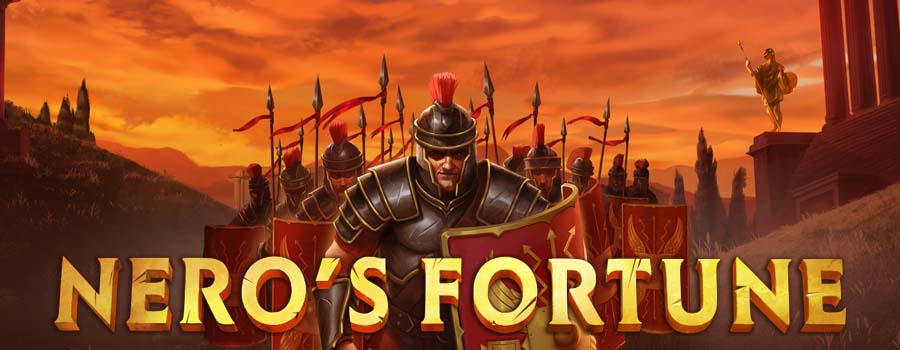
Play Nero’s Fortune online for fun or real money. Best new online casino games with bonus rounds, free spins, both for desktop and mobile. To give you best possible experience this site uses cookies. By continuing you accept our use of Cookie Policy. With 25 miles of pristine beaches, extensive inland waterways, thousands of acres of protected wildlife refuges and state parks, no sales tax, some of the lowest real estate taxes in the country, and just a couple hours drive from the metropolitan areas of Washington, D.C., Baltimore, and Philadelphia, Sussex County Delaware is nearly impossible to resist and few can! Nero’s Fortune is a Quickspin -powered online slot that set during Emperor Nero’s reign over the Roman Empire. The game does a great job of capturing the danger of the era as the background of the game features a fiery red sky and embers float across the reels. Titus, of the same surname as his father, was the delight and darling of the human race; such surpassing ability had he, by nature, art, or good fortune, to win the affections of all men, and that, too, which is no easy task, while he was emperor. Finally, Cassius Dio wrote his Roman History over 100 years after the death of Titus.
Secrets of the Dead: The Nero Files
Premieres Wednesday, February 20 at 10 p.m. on PBS (check local listings)
And for more on Nero, streamSecrets of the Dead: Nero’s Sunken City. Visit the full episode page.
The Roman emperor Nero is considered one of history’s greatest criminals. His name has become synonymous with evil, as historic accounts have accused him of killing his stepbrother, his wife and his mother, as well persecuting Christians and instigating the devastating Great Fire of Rome. This is the judgement that is passed in history from one generation to the next, but are these accounts of Nero’s reign accurate? New scientific discoveries and a closer examination of the ancient texts written about Nero cast a different light on the Roman emperor and the accusations leveled against him. Secrets of the Dead: The Nero Filesfollows internationally renowned criminal psychologist Thomas Müller and a team of scientists and historians as they investigate the new evidence in order to discover the truth about the controversial emperor.
Here are seven things you may not know about Nero:
1. Nero was adopted by his great-uncle, the emperor Claudius
Nero’s father, Gnaeus Domitius Ahenobarbus, died when he was only 2 years old. After Nero’s mother married Emperor Claudius, Nero was adopted to become his heir and successor. In 53 AD, Nero’s mother arranged for her son to marry Claudius’ daughter Octavia. After Claudius’ sudden death the following year (possibly after being fed poisoned mushrooms by Agrippina), Nero acceded to the throne at the age of 16 or 17.
Bust of Emperor Claudius, between 41 and 54 AD, Current location: Naples National Archaeological Museum, Author: Marie-Lan Nguyen (2011).
2. Fearing his younger step-brother might claim the throne, Nero had him murdered.
Shortly after Claudius’s death, Nero’s 13-year-old step brother Britannicus died suddenly. According to the ancient writer Tacitus’s account, Nero and Agrippina intentionally poisoned Britannicus to make way for Nero to take over the emperorship. Though much of this testimony has been disputed and even scientifically discredited, the accusation has contributed to Nero’s insidious reputation.
Nero and Britannicus. Image courtesy of Interspot Film.
3. According to ancient texts, Nero killed his own mother
Three ancient writers, Tacitus, Suetonius, and Cassius Dio, dictate most of what the modern world knows about Nero’s reign. According to their accounts, his mother Agrippina was a ruthless and ambitious woman who schemed and murdered to get her son on the throne. When it finally paid off, she had no intention of fading into the background. However, five years into his reign, Nero and Agrippina became locked in a brutal power struggle. In Baiae, he plotted the murder of his own mother by inviting her as a guest of honor to a sumptuous banquet at his villa. Nero had planned for his mother’s ship to sink, and depending on the writer’s account, Agrippina either died at sea, or survived the incident only for Nero to send soldiers to her villa to finish the job.
Agrippina’s final moments. Image courtesy of Interspot Film.
4. There is no proof Nero actually played the fiddle while Rome burned
The Great Fire of Rome broke out one night between July 18 and 19 in the year 64 AD. It is uncertain if it was an accident or arson; however, the fire burned for several days and nights, destroying most of the city. Rumors quickly spread that Nero started the fire to clear land for an expanded palace, and that he played music in his own palace while the city burned. However it is possible that those accusations are simply rumors with no basis.
Nero looks on while Rome burns. Image courtesy of Interspot Film.
5. The coastal resort of Baiae was one of Nero’s prized indulgences
Nero spent a fortune on banquets in Baiae, located along the Gulf of Naples, but his gatherings there weren’t just about food; they also featured sex and debauchery. Nero felt a strong connection to Baiae, and he began to covet the villas of others there, including those of his family.
Nero's Fortune
6. Nero participated in the Olympic Games
Nero competed in the Olympic Games in 67 AD in order to improve relations with Greece. He even raced a ten-horse chariot and nearly died after being thrown from it.


7. Nero’s reign ended when he committed suicide at the age of 30
Ultimately, Nero’s murderous and debauched lifestyle in Baiae caught up with him. In 68 AD, after a turbulent 13-year reign, the Roman senate ran out of patience and declared Nero a public enemy. Nero then fled, and on June 9, 68 AD, at the age of 30, he committed suicide. His death ended the Julio-Claudian dynasty.
/https%3A%2F%2Fquickspin.com%2Fwp-content%2Fthemes%2Fquickspin%2Fimg%2FFlexibleFreeRounds_logo.png "Nero")
Nero’s final moments. Image courtesy of Interspot Film.
Nero's Fortune Rtp

Secrets of the Dead: The Nero Files premieres Wednesday, February 20 at 10 9c on PBS